Aranđelovac, 13 October 2026 – Clothing alterations, preparing new meals from leftover food, and free bicycle servicing brought together students and residents of Aranđelovac through three hands-on activities organised as part of the EU for Circular Economy in Serbia project. At the Mileta Nikolić Technical School, the Slobodan Minić School of Economics and Hospitality, and Venac Slobode Square, participants demonstrated how knowledge, creativity and a little care can help extend the life of items we already own and reduce waste.
“Through this project, the Municipality of Aranđelovac has received a Circular Economy Roadmap, which includes an action plan outlining what we aim to achieve in environmental protection by 2030. It is very important to introduce topics such as the circular economy at preschool and school levels, as children are particularly receptive to these ideas. We need to raise awareness that we should not buy things we do not need and that we should extend the lifespan of every product as much as possible,” said Ivana Marjanović, Adviser at the Local Economic Development Office of the Municipality of Aranđelovac.
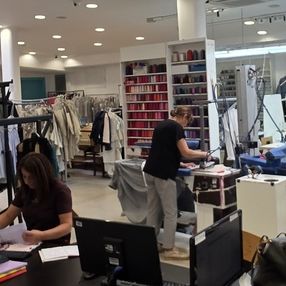
At the circular economy and textile alteration workshop held at the Mileta Nikolić Technical School, students worked in small groups under expert guidance to learn how to alter clothing and extend its lifespan. The workshop demonstrated that clothes we no longer wear can find their way back into our wardrobes with a few adjustments and a fresh idea.
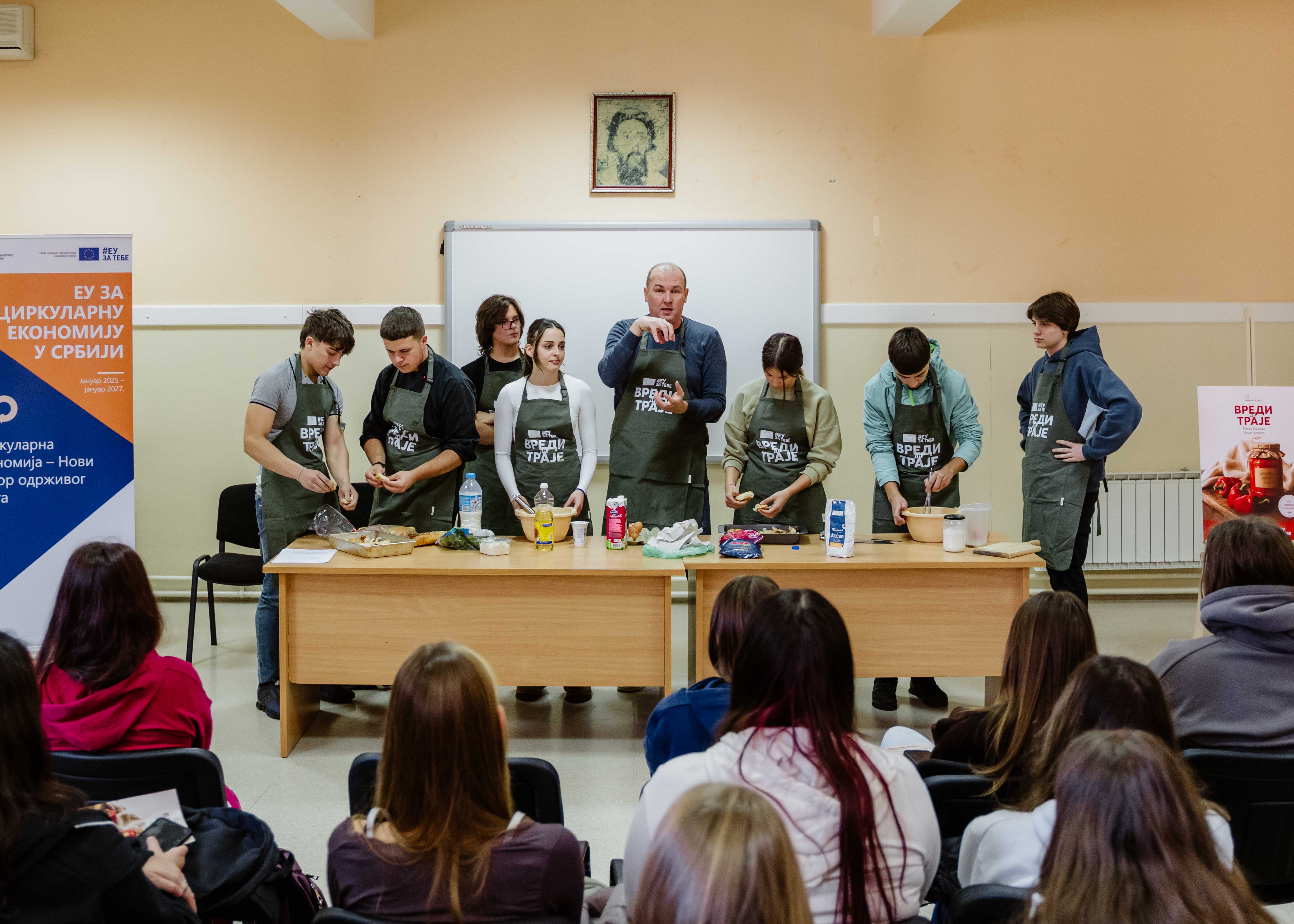
The Slobodan Minić School of Economics and Hospitality hosted a creative cooking challenge entitled Waste-Free Kitchen. By preparing new meals from leftover food, participants demonstrated how planning and creativity in the kitchen can help prevent food from ending up in the waste bin.
“Encouraging the repair and reuse of products is an important step towards establishing a circular economy and managing resources more responsibly. By extending the lifespan of items such as bicycles, we not only reduce waste but also promote more efficient resource use and the development of more sustainable habits. This is precisely why the Ministry of Environmental Protection, through this and similar projects, places a strong emphasis on educating young people and involving them in practical activities, as raising awareness of the importance of the circular economy is essential for the long-term protection of the environment,” said Aleksandra Vučinić, Head of the Circular Economy and Sustainable Development Section at the Ministry of Environmental Protection.
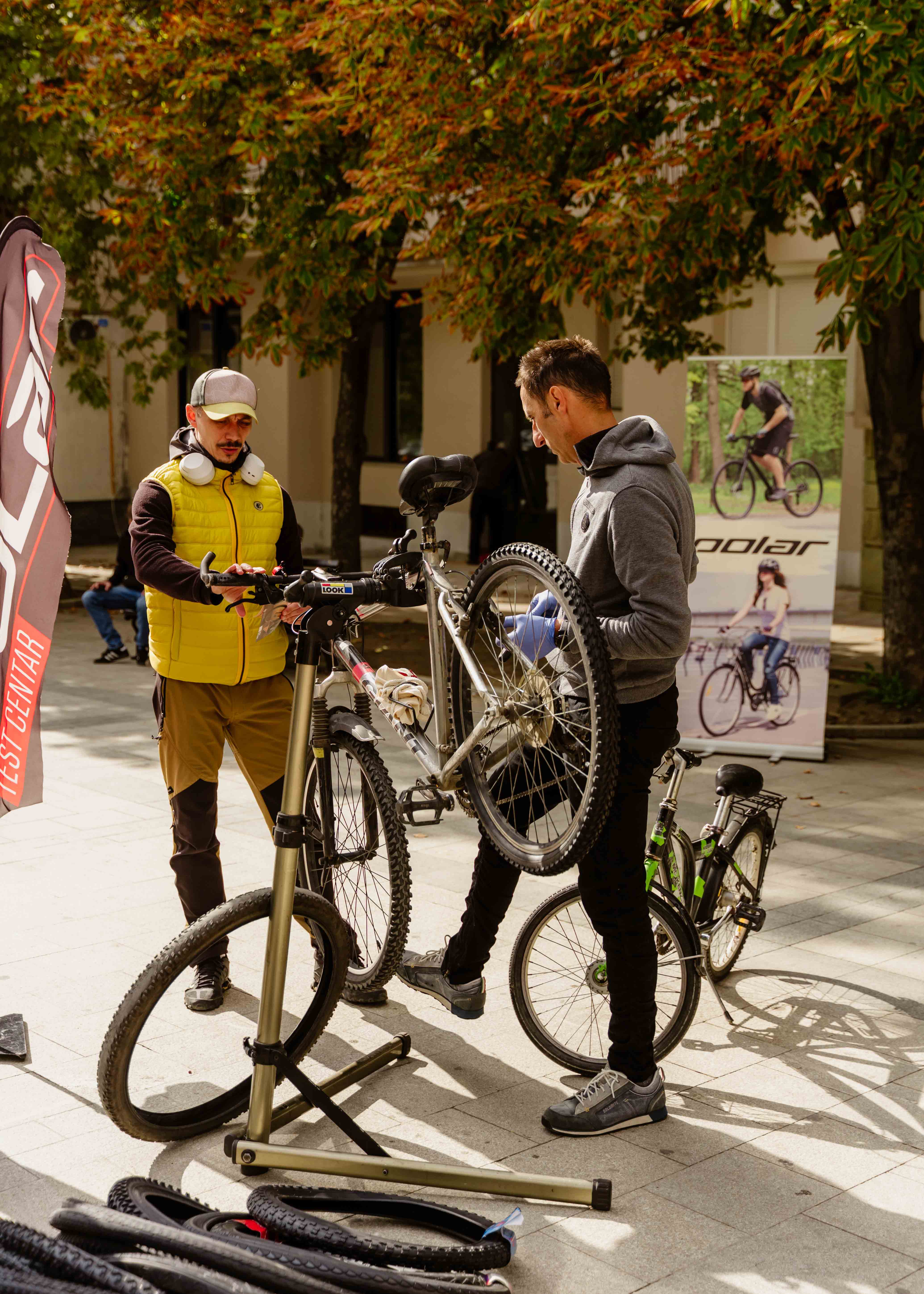
At Venac Slobode Square, residents brought their bicycles for free servicing. Local mechanics checked tyres, brakes, chains and lights, and offered advice on routine maintenance and necessary repairs. Residents also learned which tasks they could carry out themselves to keep their bicycles in use for longer and which repairs should be left to professional mechanics.
“The circular economy means keeping products in use for as long as possible through reuse, repair and waste prevention. When repairs are simple, accessible and affordable, people are much more likely to choose them. Bicycle maintenance and repair are an excellent example: the skills students acquire today enable them to extend the lifespan of their bicycles, reduce waste and make more sustainable choices,” said Mauro Di Veroli, Head of Cooperation at the Delegation of the European Union to Serbia.
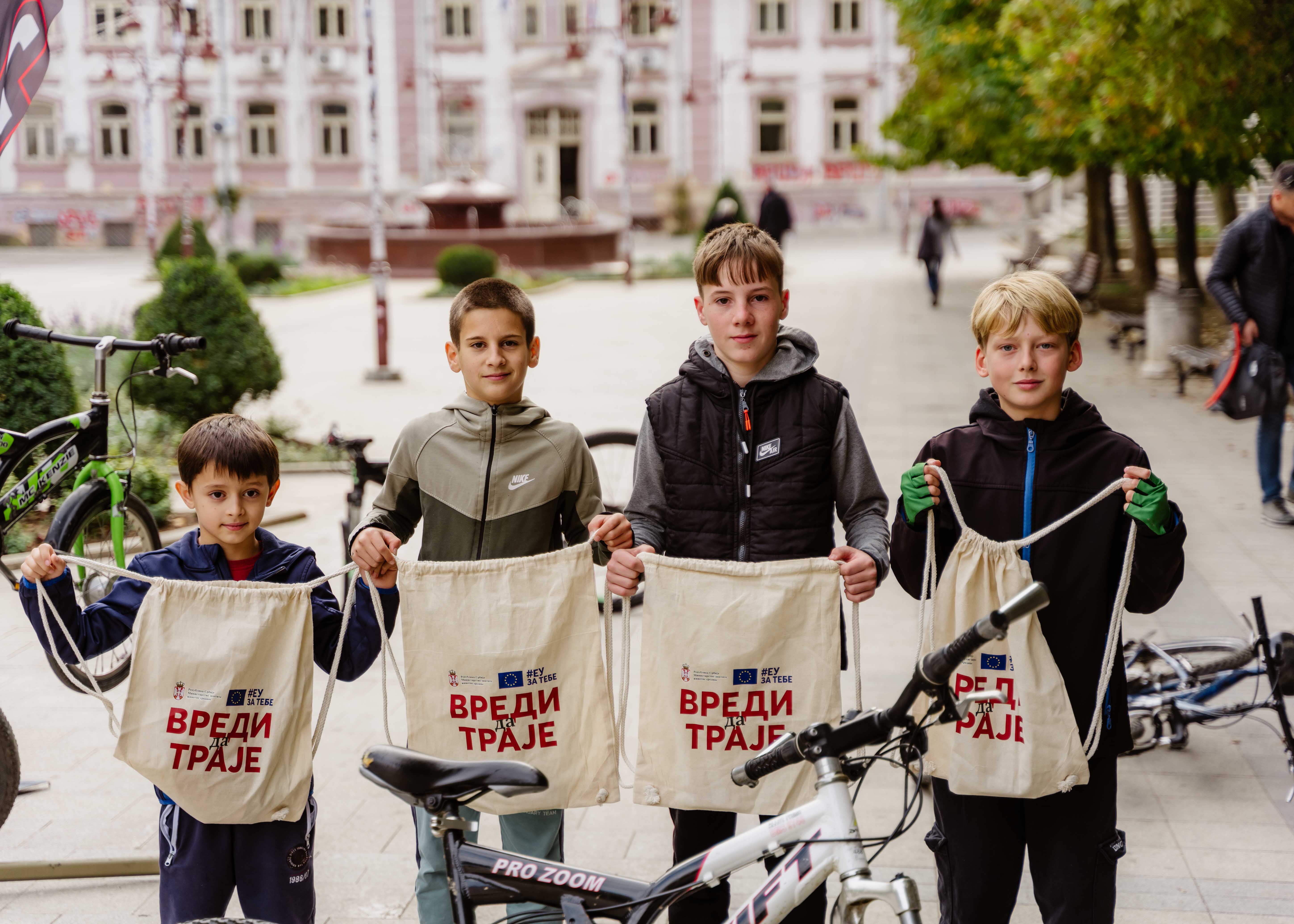
The activities brought the principles of the circular economy closer to everyday life by focusing on simple decisions: what to do with clothes we no longer wear, how to use leftover food, and whether to repair a bicycle that has been left forgotten. The message is clear: what we already own can often last longer and serve us better.
The EU for Circular Economy in Serbia project is implemented by the Ministry of Environmental Protection to support Serbia’s transition towards a circular economy through practical solutions that encourage more responsible resource use, waste reduction and the development of sustainable local communities. The project is funded by the European Union.
Photos: Luka Tomić / EU for Circular Economy in Serbia