In cooperation with the Customs Administration of the Republic of Serbia, the United Nations Development Programme (UNDP) organised a series of workshops for business representatives to present the ITMS functionalities. The workshops were held from 29 September to 2 October in Niš, Novi Sad, Kraljevo, and Belgrade.
ITMS is a modern IT system that contains all data on goods in international trade, enables their proper classification, and forms the core of every customs procedure. Its introduction ensures that Serbia’s customs administration is prepared to meet the challenges of modern trade and to align with European Union (EU) standards.
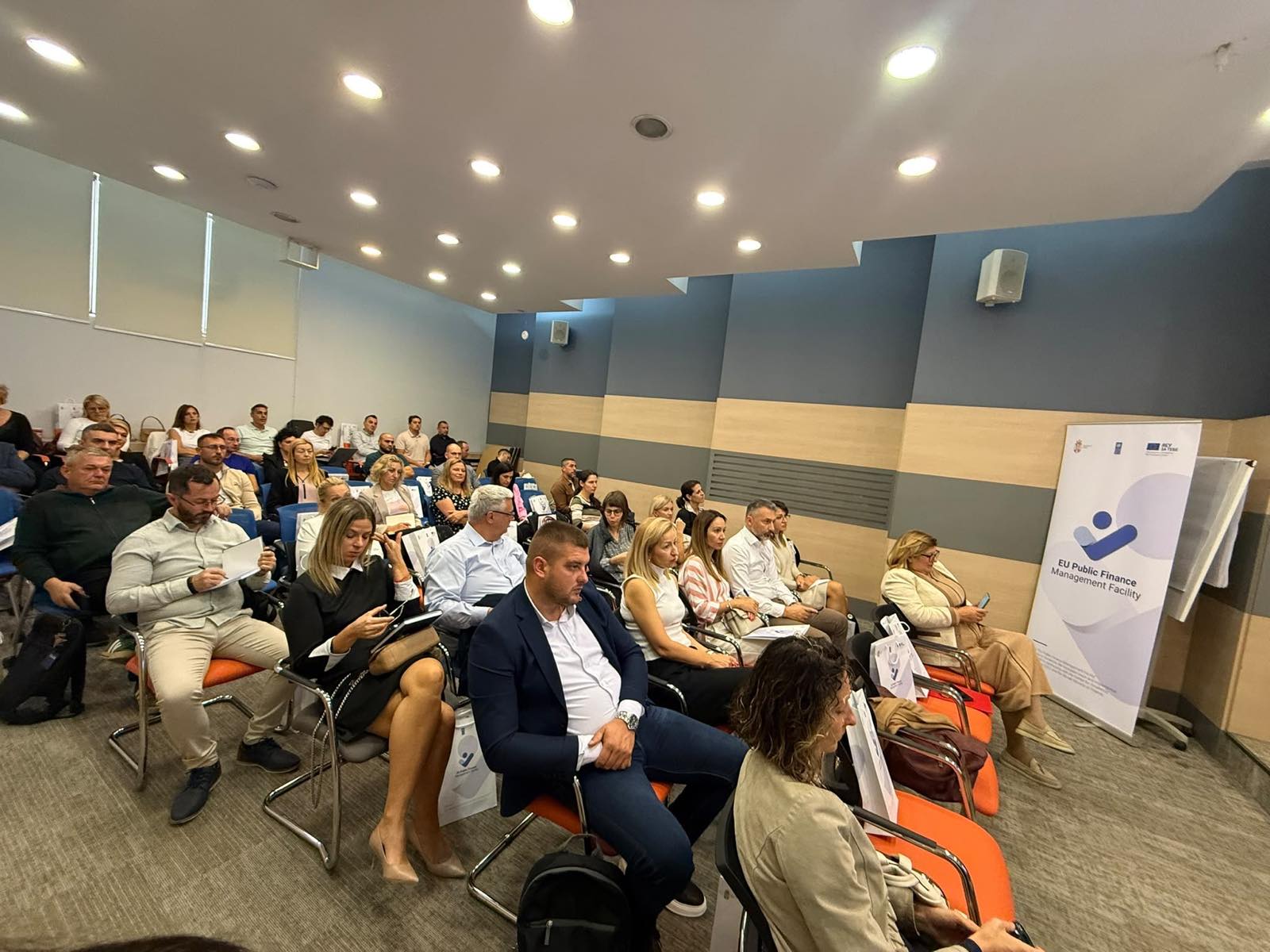
During the workshops, customs officials demonstrated how digital tools improve everyday business procedures - accelerating document processing, reducing paperwork, providing clearer insight into tariffs and regulations, and increasing transparency.
The modernisation of the customs system marks a transition to an advanced IT environment, adopting concepts already in use within the EU. This includes the digitalisation of import and export, customs decision-making, and tariff management, while the “Single Window” approach allows all formalities to be completed through one portal.
Approximately 200 participants learned how customs quotas are allocated and how the new system provides real-time visibility into available quantities and allocation percentages, ensuring transparency.
A dedicated section addressed the transition from the old “EX codes” to new additional codes, introduced as a unified designation that clearly indicates which measure, or regulation applies to specific goods. Unlike the numerous and overlapping EX codes, the new system simplifies classification, speeds up declaration processing, and clarifies the application of rules.
Businesses were encouraged to engage directly with the customs administration for support in using new digital tools and to provide feedback during implementation.
To ensure effective implementation, UNDP will organise additional training for customs officers and software companies and arrange study visits to EU member states where the system has been operational since 2013.
The rapid growth of international trade, the need for automation and real-time data exchange with EU systems, and obligations under Chapter 29 - Customs Union require modern solutions such as ITMS. This system will enable integration with European platforms and lay the groundwork for alignment with EU TARIC 3 customs standards.
The introduction and implementation of ITMS are part of the PFM Facility projectfunded by the European Union and implemented by UNDP. The goal is to develop a modern, efficient, and EU‑aligned customs service that facilitates trade and brings Serbia closer to European standards.